
Business & Digitalisation
E-Invoicing & QR-bill
The QR-bill is the Swiss standard, and B2B/B2G invoices increasingly run through the PEPPOL network. Both are connected technically and fitted into existing workflows.
Scope of services
Invoices that keep moving without a format break.
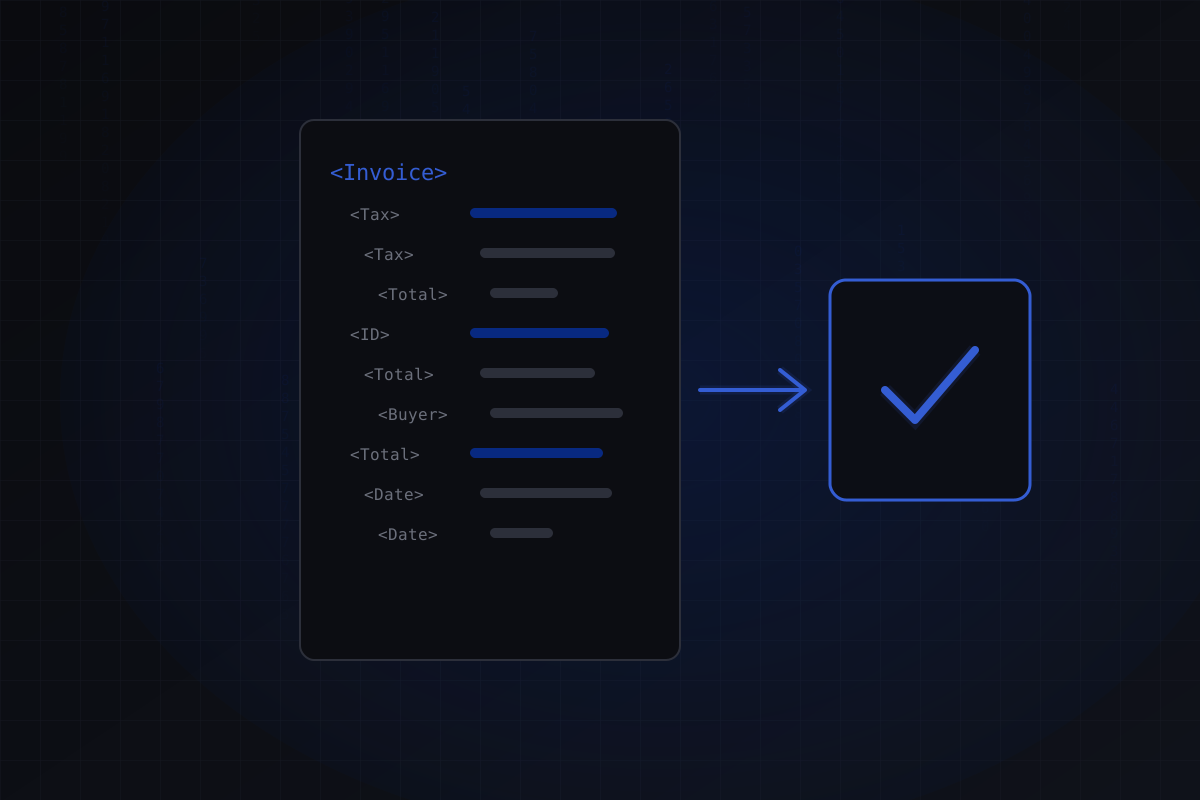
Incoming invoices are checked automatically and transferred into accounting; outgoing invoices are generated directly from ERP or accounting in the correct QR-bill or PEPPOL format.
- Introduction of the QR-bill
- PEPPOL connection for B2B and B2G invoices
- Automated validation of incoming e-invoices
- Integration with ERP and accounting
- Automated invoice processing
Process
How it works.
01
Current state
Invoice channels and systems are recorded.
02
Formats
QR-bill and PEPPOL are configured as required.
03
Integration
ERP and accounting are connected.
04
Automation
Incoming invoices are validated and processed further.
Benefits
What you gain.
Requirement met
Receiving and sending happen in the required format.
Less manual work
Invoice data flows onward automatically.
Fewer errors
Automatic checks instead of manual retyping.
FAQ
Good to know.
What is the QR-bill?
The QR-bill has been the Swiss standard for payments since 2022 and has replaced the former payment slips. Banks now accept only the QR-bill.
Is a PDF an e-invoice?
No. An e-invoice is a structured format that machines can read, for example via the PEPPOL network for B2B and B2G invoices.
Does this work with the existing software?
Often, yes. It is checked whether ERP and accounting already support the formats or need extending.
Related
Related services
Next step
Let's talk about your IT.
A first conversation clarifies the starting point and possible next steps.